
Dating And Caregiving
By The Disabled Dating Canada Team
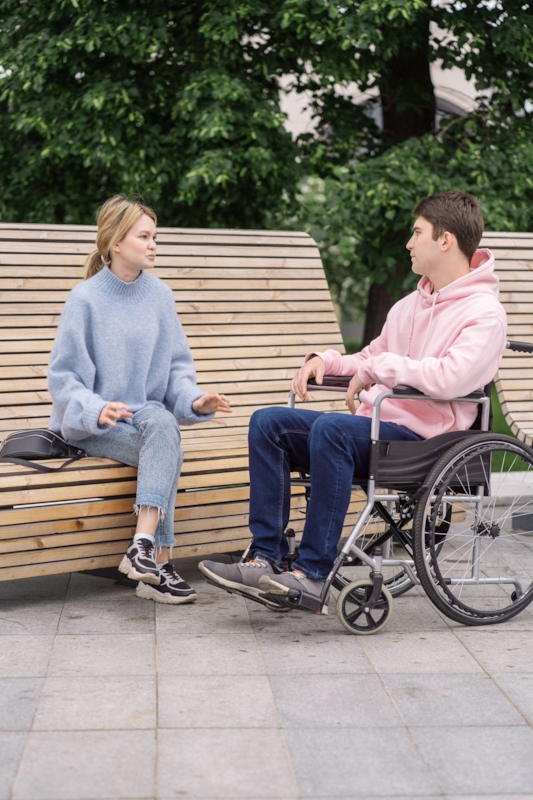
Whether you're a caregiver, receive care, or both, dating alongside caregiving comes with its own scheduling and emotional realities.
Be upfront about your routine
Sharing how caregiving fits into your schedule early on helps set realistic expectations for both of you.
Look for a partner who respects the role
A good match treats your caregiving responsibilities as a normal part of your life, not as a problem to be solved.
When you're the one providing care
If you provide regular caregiving — for a family member, a child, anyone else in your life — dating has to fit around that responsibility rather than the other way around. That's a legitimate constraint, not something to apologize for or hide from a potential match.
Being upfront early about caregiving responsibilities, including the kind of flexibility and notice you may need, filters for matches who are genuinely comfortable with that reality rather than ones who'll quietly resent it once it actually comes up in practice.
When you receive care, and dating someone new
If you receive regular care, deciding how and when to explain that to a new match takes some thought — not because it's something to be ashamed of, but because it changes the practical shape of a relationship in ways worth being upfront about. A partner who's going to be a good fit will want to understand this clearly, not have it minimized.
It's reasonable to wait until there's a bit of established interest before going into detail, the same way you would with any other significant life context. But it shouldn't be hidden indefinitely once a relationship is clearly moving forward.
The caregiver-partner dynamic, and keeping it separate from romance
In some relationships, a partner takes on some caregiving responsibilities over time — and that can work well, but it's worth being deliberate about keeping the romantic relationship distinct from a caregiving one wherever possible. Blurring the two entirely tends to erode the romantic side over time.
Bringing in outside support — professional care, other family members, community resources — where available, rather than defaulting entirely to a partner, helps preserve the relationship as a relationship rather than letting it slide fully into a caregiving arrangement.
Energy budgeting when caregiving is part of your life
Caregiving, whether given or received, takes a real toll on the energy available for dating itself — for messaging, for planning dates, for the emotional bandwidth a new relationship requires. Being realistic about that limited capacity, rather than overcommitting and then disappearing, tends to lead to better outcomes for everyone involved.
It's entirely reasonable to date more slowly, with more space between conversations or dates, when caregiving is a significant part of your life. The right match will understand that pace rather than reading it as disinterest.
Finding matches who already understand the territory
Caregiving — whether you're providing it or receiving it — is common enough within the disability community that many members on Disabled Dating Canada already have direct or adjacent experience with it. That shared context tends to make conversations about caregiving logistics far less fraught than they might be on a general platform.
That doesn't replace the need for an honest conversation specific to your situation, but it does mean you're less likely to be starting that conversation from a place of zero shared understanding.
Avoiding burnout by protecting some space for yourself
Caregiving responsibilities, combined with the emotional work of dating, can use up more capacity than it seems like it should. Protecting at least some unscheduled time for yourself — not caregiving, not dating, just rest — helps prevent the kind of burnout that eventually undermines both.
This isn't selfish; it's necessary maintenance. A version of you that's running on empty isn't able to show up well for caregiving or for a new relationship, no matter how much you care about both.
However caregiving shows up in your life, it doesn't disqualify you from a good relationship — it just means the relationship needs to be built with that reality in mind from the start, by both people involved.
Letting the relationship be more than logistics
It's easy for caregiving-adjacent conversations to dominate a relationship's early stages, especially once a partner understands the full picture. Make space, deliberately, for the parts of the relationship that have nothing to do with logistics — humour, attraction, shared interests, ordinary fun.
A relationship that's only ever discussing schedules and support needs is missing the parts that actually make it a relationship, rather than a coordination arrangement.
If caregiving ever starts to feel entirely unsustainable, that's worth raising with your support network or a professional, separate from any dating considerations — your own wellbeing has to come first, regardless of what else is happening in your life.
Related articles
See what's included
Compare the Classic, VIP, and VIP+ tiers and what each one unlocks.
Trust & Safety
ID verification, privacy controls, and active moderation, explained.
Ready to join?
Create your free account and start connecting with people who understand your experience.
Join Now