
First Date Ideas That Are Accessible
By The Disabled Dating Canada Team
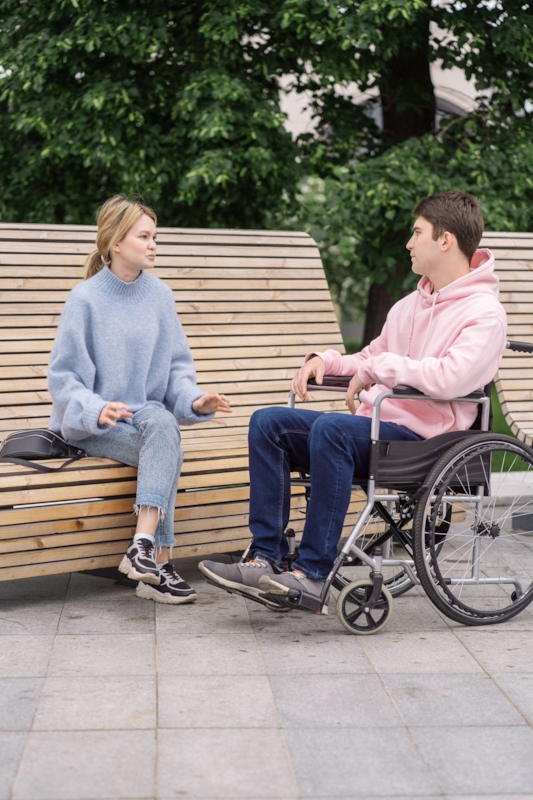
A good first date doesn't need to be elaborate — it needs to be a place where you can both relax and actually talk.
Low-key, low-pressure options
Coffee, a quiet restaurant, or a stroll through an accessible park all work well precisely because they don't demand much logistics or stamina.
Ask, don't assume
If you're unsure about a venue's accessibility, a quick call or website check beforehand saves both of you a stressful surprise.
Choosing low-pressure settings over high-stakes ones
A dinner date at a fancy, unfamiliar restaurant adds layers of pressure — unclear accessibility, formal expectations, limited ability to adjust if something doesn't work. A more casual, familiar setting — a coffee shop, a walk somewhere you already know is accessible — removes that pressure and lets the conversation be the focus.
There's no rule that a first date needs to be impressive. The goal is simply enough comfort and ease that an honest conversation can happen.
Activities with a built-in conversation starter
A shared activity — visiting a gallery, browsing a market, a casual game — gives a date a natural focal point beyond direct face-to-face conversation, which can ease pressure for anyone (introverted or not) who finds sustained eye-contact conversation a little intense.
This works particularly well for a first date, where some natural awkwardness is normal. Having something to look at or do together fills potential silences without either person needing to force constant talk.
Confirming accessibility specifics ahead of time
Beyond a general sense that a venue is 'accessible,' confirming specifics — door width, washroom layout, table height, noise level — removes the risk of a surprise that derails the date. A quick call or look at recent accessibility-specific reviews takes only a few minutes.
It's also worth confirming directly with your match what they personally need, rather than assuming a venue that worked for someone else automatically works for them.
Timing the date around energy levels
Choosing a time of day that matches both people's energy — an early coffee for morning people, a later meet-up for those who need more time to get going — sets the date up for a better conversation than fighting against either person's natural rhythm.
This is worth discussing plainly when scheduling, rather than defaulting to a generic time slot that might not actually suit either person.
Having a graceful way to end or extend the date
A first date works best with a natural off-ramp built in — a set end time, rather than an open-ended plan that leaves both people unsure when it's appropriate to leave. If it's going well, extending is always an option; if it's not, having a clear end point avoids an awkward, dragged-out goodbye.
Letting your match help choose
Rather than presenting a single fixed plan, offering two or three accessible options and letting your match pick gives them a sense of involvement and surfaces any preferences or needs they might not have mentioned otherwise.
This collaborative approach to planning also sets a healthy precedent for how decisions get made together later in the relationship, rather than one person always dictating the plan.
What to skip on a first accessible date
Avoid anything requiring a long, fixed time commitment without an easy exit — a multi-hour tour, a film, an event with no natural break point. If the date isn't going well, or energy runs out earlier than expected, you want an easy, graceful way to wrap up.
Save longer commitments for once you've already had a successful shorter date together and know the connection is worth the bigger investment of time.
Building confidence in your own planning
The more first dates you plan thoughtfully around accessibility, the more natural the process becomes — eventually it's less a checklist and more an instinct for what tends to work well. That confidence makes future dates considerably less stressful to organize.
None of this needs to be perfect on the first try. A date that has a minor accessibility hiccup but is handled calmly together often still ends up being a good date, simply because of how it was handled.
A final word on first impressions
However the venue and plan come together, the actual first impression that matters most is how present and genuine you both are with each other — the setting is just the backdrop, not the substance of the date itself.
A perfectly chosen accessible venue with a distracted, disengaged conversation will always matter less than an ordinary cafe where both people were genuinely paying attention to each other.
Keep that perspective in mind while planning — the venue just needs to work logistically, not be impressive.
That mindset alone tends to make the whole planning process noticeably less stressful from the start.
Related articles
See what's included
Compare the Classic, VIP, and VIP+ tiers and what each one unlocks.
Trust & Safety
ID verification, privacy controls, and active moderation, explained.
Ready to join?
Create your free account and start connecting with people who understand your experience.
Join Now