
Online Dating Safety Tips
By The Disabled Dating Canada Team
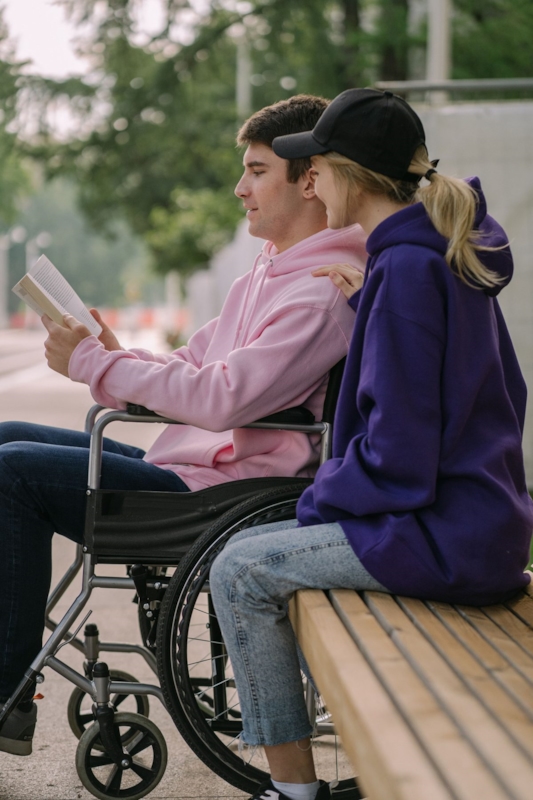
Online dating safety isn't about being suspicious of everyone — it's about a few consistent habits that protect you without getting in the way of actually connecting.
Keep early conversations on-platform
Messaging within the platform before sharing personal contact details gives you more control, plus access to blocking and reporting tools if something feels off.
Meet in public, tell someone your plans
For a first in-person meeting, choose a public, accessible place and let a friend know where you'll be. See the full safety approach on the Trust & Safety page.
Building a safety habit from day one
Good safety habits work best established from the very start, before they're urgently needed — verifying profiles, keeping early conversations on-platform, confirming meeting details with someone outside the relationship. Building these as defaults, rather than reactive measures, removes the friction of having to think them through under pressure later.
None of these habits require treating every match with suspicion. They're simply sensible defaults that protect you regardless of how a specific connection turns out.
Using verification and reporting tools as designed
Free ID Verification and Admin Profile Validation both exist to add a layer of confidence before you invest significant time in a connection. Checking for these signals, and using the platform's reporting tools when something feels off, makes the whole community safer, not just your own individual experience.
Reporting isn't only for serious incidents — a vague sense that something's wrong is worth flagging too. Moderation teams rely on these reports to catch patterns that aren't always obvious from any single interaction.
Protecting personal information early on
Keeping specific personal details — home address, workplace, financial information — private until real trust has been established protects you regardless of how genuine a connection feels in early conversations. This isn't about distrust; it's a sensible default that costs nothing.
If a match pushes for this kind of information unusually early, or expresses impatience when you decline to share it yet, that's worth noticing as a pattern, not just a one-off request.
Safety considerations specific to disability
Disabled daters sometimes face specific safety considerations — accessibility of a meeting location doubling as a safety factor, vulnerability related to needing assistance from a stranger, navigating unfamiliar locations with mobility considerations. Planning around these specifics, rather than relying on generic safety advice alone, gives more complete protection.
It's reasonable to ask a match directly how they'd handle a specific accessibility-related safety scenario before meeting, the same way you'd confirm any other logistical detail.
Trusting the process while staying alert
Safety awareness and genuine openness to connection aren't opposites — the goal is holding both at once, rather than letting caution prevent you from engaging authentically with matches who are exactly who they present themselves to be.
Most people you encounter on a thoughtfully moderated platform are genuine. Staying alert to the exceptions doesn't require treating the majority with the same suspicion reserved for the rare bad actor.
Recognizing patterns across multiple red flags
No single oddity in a conversation necessarily means danger, but a pattern — reluctance to verify identity, pressure to move off-platform quickly, inconsistent personal details — taken together is worth taking seriously. It's the combination, not any one factor alone, that usually matters most.
Trusting your overall read of a pattern, even without a single dramatic red flag, is a reasonable basis for slowing down or ending a connection.
Safety doesn't end after the first date
Ongoing safety awareness matters beyond the first meeting too — continuing to verify consistency, noticing if a partner's behaviour shifts in concerning ways, maintaining your own support network outside the relationship. Safety isn't a single checkpoint passed once and then forgotten.
This applies throughout a relationship's life, not just during the early, more obviously vulnerable stage of meeting someone new.
Building confidence through consistent practice
The more consistently you apply these safety habits, the less effort they eventually require — they become second nature rather than a conscious checklist. That ease, built through repetition, lets you engage with new matches confidently rather than anxiously.
Confidence in your own safety practices, more than any single tip, tends to be what makes online dating feel manageable and even enjoyable over time.
Layer enough of these habits together and safety becomes a quiet, steady background presence rather than a constant source of worry.
A final reminder on balance
Safety habits and genuine connection aren't in tension with each other — the best, most sustainable relationships are usually the ones built on a foundation of mutual trust that was earned carefully, not assumed blindly from the start.
That careful foundation tends to make everything that follows considerably more solid.
Stay sensible, stay aware, and let the rest of your attention go toward actually enjoying the process of meeting new people.
Related articles
See what's included
Compare the Classic, VIP, and VIP+ tiers and what each one unlocks.
Trust & Safety
ID verification, privacy controls, and active moderation, explained.
Ready to join?
Create your free account and start connecting with people who understand your experience.
Join Now