
Writing A Great First Message
By The Disabled Dating Canada Team
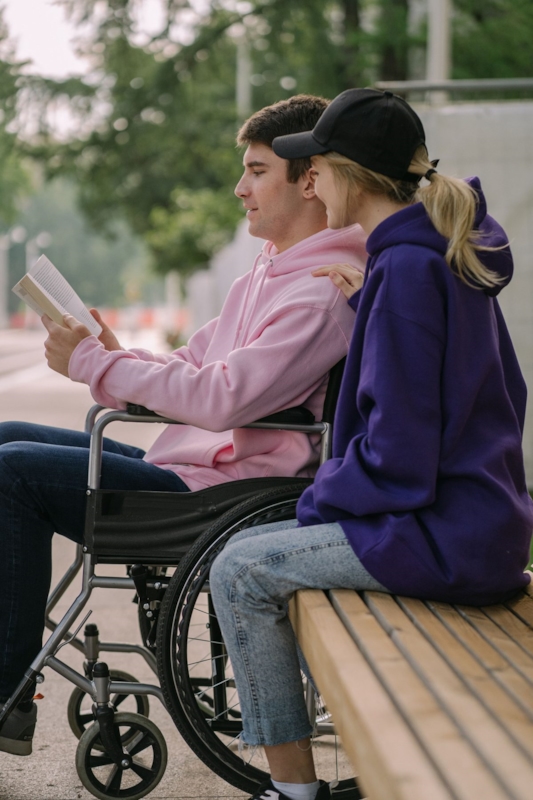
A great first message references something specific from the other person's profile — it shows you actually read it, not just swiped.
Skip the generic opener
"Hey, how's it going" rarely gets a reply. A specific question about something in their profile gives them an easy, real thing to respond to.
Keep it short
A message that's two or three sentences, with one clear question, is easier to reply to than a paragraph.
Referencing something specific from their profile
A first message that references a specific detail from a match's profile — a hobby, a photo, something in their bio — performs far better than a generic 'hey, how are you.' Specificity signals that you actually read their profile and are genuinely interested, not just messaging everyone the same line.
Even a small detail works well as a starting point. The point isn't to write an essay — it's to show genuine attention.
Asking a genuine, open-ended question
Ending your first message with a genuine, open-ended question gives the other person an easy, natural way to respond, rather than leaving them to figure out how to continue a conversation that started with just a statement or compliment.
A question tied to the specific detail you referenced works especially well, since it shows continued curiosity rather than a generic prompt that could apply to anyone.
Keeping the tone warm but not overdone
A first message that's warm and friendly without being overly intense or effusive tends to land better than either a flat, minimal message or an overly enthusiastic one. Matching the tone you'd want to receive yourself is usually a reliable guide.
There's no need to perform excitement you don't genuinely feel yet — natural warmth, even understated, reads as more authentic than forced enthusiasm.
Deciding when and how to mention your disability
There's no single right moment to mention your disability in a first message — some people prefer to reference it naturally and early, others prefer to let the conversation develop first. Either approach is reasonable, and your profile likely already provides relevant context either way.
What matters more than timing is that, whenever it comes up, it's mentioned the same way you'd mention any other genuine part of who you are — neither minimized nor over-explained.
Following up if there's no response
A lack of response to a first message usually isn't worth a follow-up message pushing for a reply — it typically means the timing or fit wasn't right, not that your message needs improvement. Moving on to other matches uses your energy more productively than repeated follow-ups.
If a conversation does start but later goes quiet, a single, light follow-up after a reasonable gap is fine, but more than one risks feeling like pressure rather than genuine interest.
Avoiding generic openers entirely
Generic openers like 'hey' or 'how's it going' are easy to send but rarely effective, since they require the recipient to do all the work of starting a real conversation. A small amount of extra effort on the first message pays off disproportionately in response rate.
This doesn't require a long message — even a short, specific one beats a longer, generic one every time.
Matching message length to the platform's pace
A first message that's too long can feel overwhelming, while one that's too short can feel low-effort. A few genuine sentences — enough to show real interest without demanding a lengthy reply — tends to hit the right balance for most first contacts.
As the conversation develops, message length can naturally grow alongside the rapport, but the first message specifically benefits from staying relatively concise.
Being yourself rather than overthinking the perfect line
There's no single perfect first message that guarantees a response — what matters more is that the message sounds genuinely like you, rather than an attempt to craft something impressively clever. Authenticity reads through more clearly than cleverness.
Overthinking a first message to the point of paralysis often costs more lost opportunities than simply sending a slightly imperfect but genuine one.
Practice makes the process easier
Writing first messages tends to get noticeably easier with practice — the specific phrasing that works for you, the comfortable balance of warmth and brevity, all become more natural after sending a number of them.
Don't expect the very first messages you send to feel effortless. Like most communication skills, this one improves steadily with genuine repetition rather than through any single insight.
Keep it specific, keep it genuine, and trust that the right opening message, sent to the right match, is usually enough to start something real.
Every great conversation on the platform started with someone willing to send that first, slightly imperfect message.
Related articles
See what's included
Compare the Classic, VIP, and VIP+ tiers and what each one unlocks.
Trust & Safety
ID verification, privacy controls, and active moderation, explained.
Ready to join?
Create your free account and start connecting with people who understand your experience.
Join Now