
Dating After An Accident
By The Disabled Dating Canada Team
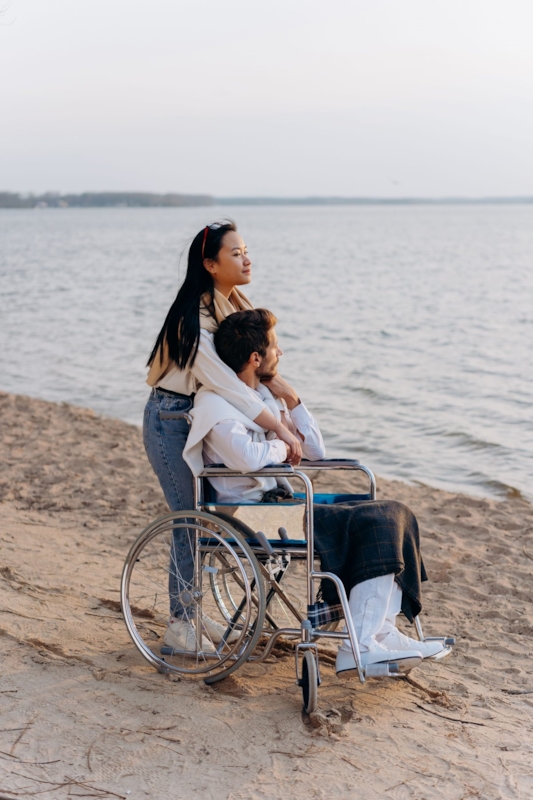
Returning to dating after an accident is its own kind of adjustment — to your body, your routines, and sometimes your sense of who you are now.
There's no deadline for being 'ready'
Whether that's weeks or years, your timeline for returning to dating is valid. Disabled Dating Canada doesn't put a clock on when you should feel ready.
You're not starting from zero
The things that made you a good partner before — your humor, your values, your way of listening — haven't gone anywhere.
Adjusting to a new relationship with your body
An accident that changes your physical abilities often means relearning your own relationship with your body before you're ready to introduce that body to someone new. That adjustment period — physically and emotionally — deserves real time, and rushing back into dating before you've had it rarely goes well.
There's a meaningful difference between dating again because you genuinely want connection and dating again to prove to yourself that you're still 'normal' or still desirable. The first tends to lead somewhere good; the second tends to attract the wrong kind of validation-seeking instead of real compatibility.
Talking about the accident without it becoming the whole story
Depending on how recent and how visible the changes are, the accident may come up naturally in early conversations — that's fine, and doesn't need to be avoided. What's worth watching for is whether it becomes the entire frame through which a match sees you, rather than one part of your story.
A simple, factual mention, offered without over-explaining or over-apologizing, tends to set the right tone: this happened, it changed some things, and you're someone worth getting to know regardless. Matches who can't meet that framing aren't the right fit.
Navigating changed mobility in everyday dating logistics
If the accident changed your mobility, date planning may now require more upfront thought than it used to — accessible venues, transportation, energy pacing through the day. None of that is a burden you need to apologize for; it's simply a new set of logistics, the same as anyone's specific preferences or constraints.
Being direct about these needs from early on, rather than minimizing them to seem easier to date, tends to attract partners who are genuinely comfortable with the adjustment rather than ones who agreed to something they didn't fully understand.
Recognizing your own readiness signals
Readiness to date again after an accident doesn't always arrive as a clean, obvious feeling — it can be more like noticing you're curious about someone, or that you want company again, even while still managing ongoing recovery or adjustment. Those small signals are worth trusting rather than waiting for total certainty.
At the same time, if dating still feels like something you're doing to distract from harder feelings about the accident rather than something you actually want, that's worth sitting with a bit longer before continuing.
A community that doesn't require re-explaining the basics
One practical advantage of dating within a disability-aware community after an accident is not needing to justify or explain, from scratch, why your mobility or routine looks different than it used to. That baseline understanding removes a layer of friction that can otherwise dominate early conversations.
Disabled Dating Canada's community includes many members whose disability resulted from an accident or injury rather than a lifelong condition — a context that's often missing entirely from general dating platforms.
Letting your identity stay larger than the accident
An accident, especially a recent or traumatic one, can dominate your sense of self for a period. Most people eventually find a way to hold it as one significant chapter rather than the entirety of their story — a process that takes real time and isn't owed to anyone on a particular schedule.
That broader sense of self tends to come through naturally once it's genuinely settled, and it shows in how you present yourself to potential matches — as someone with a full life and history, not solely defined by what happened.
Recovery and dating aren't sequential steps you complete in order — they can run alongside each other, each informing the other, on whatever timeline actually fits your circumstances rather than someone else's expectations.
You're allowed to take up space in this process
It can feel, especially soon after an accident, like you should lower your expectations or be grateful for any interest at all. That instinct is understandable but not accurate, and it's worth pushing back against in your own thinking.
You're entitled to the same standards and the same hope for a genuinely good match as you were before the accident — nothing about that has changed.
A support network, whether that's friends, family, a therapist, or others who've gone through a similar recovery, can make a real difference in how ready and resilient you feel heading back into dating.
Related articles
See what's included
Compare the Classic, VIP, and VIP+ tiers and what each one unlocks.
Trust & Safety
ID verification, privacy controls, and active moderation, explained.
Ready to join?
Create your free account and start connecting with people who understand your experience.
Join Now